


Margin is the amount and / or security an investor must pay to his / her stock broker before executing a trade. Margin requirements are prescribed by SEBI and enforced by the stock exchanges.
Margin Trading is a facility provided by stock broker to clients whereby an client can buy or sell securities without paying 100% amount upfront towards purchase consideration or 100% shares that are sold. The part paid by the investor is called ‘Margin’ and the portion that is not paid is the leverage given to client by the broker.
Investor can pay the margin in form of cash payment or by depositing securities. Securities provided as margin are also known as 'Collateral'.
As per SEBI's guidelines, w.e.f. August 1, 2020, collaterals in form of securities can be accepted by stock brokers only in form of margin pledge created on the securities held in client’s demat account.
Instruction to create margin pledge on securities can be given by client or by the person holding the Power of Attorney, in physical form or electronically through SPEED-e.
Such margin pledge can be created in favour of a specially designated demat account of the stock broker (opened as TM - Client Securities Margin Pledge Account or TM / CM - Client Securities Margin Pledge Account).
There are three ways to submit Margin Pledge Instructions -
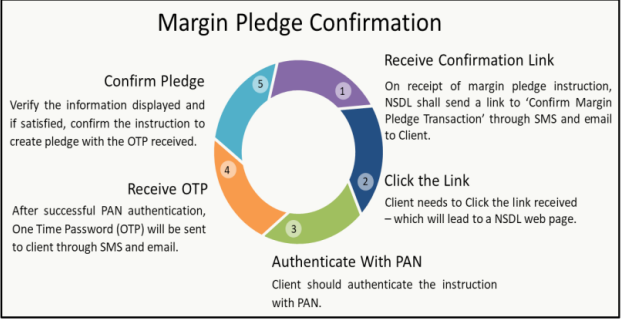
In this case, you will need to confirm the Margin Pledge instruction using OTP received on your registered mobile number or registered email ID.
In case of default in payment by client, Stock Broker (TM) can submit instruction for Invocation of Pledge existing in its favour in physical form or electronically through SPEED-e facility.
Upon successful execution of Pledge Invocation instruction in NSDL system, securities will be debited from the client's demat account (Pledgor's account) and credited to TM's demat account (Pledgee's account).

Stay updated with latest news and updates with our weekly newsletter