Riding the Highs and Lows: Identifying Emotions in Trading
The financial markets are an emotional rollercoaster. From fear to euphoria, investors and s often experience different emotions. These feelings may cloud judgement and prompt impulsive decisions. This could potentially lead to costly mistakes. Instead of trying to avoid these emotions altogether which is impossible, of course identify them, understand their impact on trading and employ strategies to stay rational. Some of the common emotions that investors investor experience are:
- Euphoria: Euphoria is the feeling of elation or extreme joy that investors experience when they make a profitable trade, especially more so when it’s unexpected. Euphoria can be a positive emotion. But, investors have to be wary of it. Euphoria can cause them to have an overconfidence bias, making them take bigger risks than they usually do.
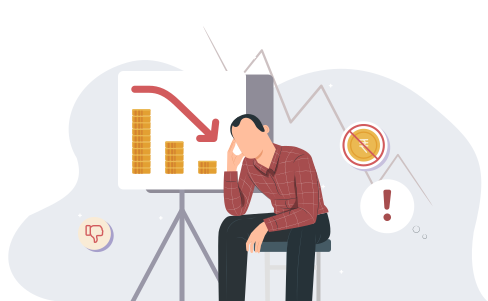
- Despondency: Despondency is the state of utter despair that investors go through after facing sheer panic due to losses. The despondency can be caused either due to a major loss or a series of losses. During this stage, the confidence of the investor is at its lowest.
- Fear: Sudden and unexpected market volatility can cause a investor to feel immense fear. At such a stage, investors often feel anxious about impending short-term losses. They may take rash decisions to offset some of this loss, without doing sound analysis.
Understanding How Emotions Influence Decision-making
- Cognitive Biases: Making decisions while only relying on emotions may result in a range of cognitive biases. For example, investors and investors may selectively interpret information or fixate on irrelevant data points. This can further contribute to impulsive decision-making, as investors may act hastily without conducting a thorough analysis or considering long-term consequences.
- Impulsive Decision-making: Investors who rely on their emotions to guide them may make impulsive decisions. These decisions lack proper insight into the market and can lead to greater losses down the line.
- Loss Aversion: Investors who are afraid of short-term losses may fixate on them and regard them as more painful than long-term gains. This may lead them to become overly concerned with avoiding loss rather than maximising profit.
Avoid Emotional Pitfalls: Techniques to Stay Rational During Trading
There are various ways to prevent your emotions from controlling your trading decisions. Here are some of the popular ones
- Set Some Ground Rules: Setting some fundamental rules for trading can effectively manage emotions. By doing this, they will be in a better position to establish levels at which they should buy or sell. What this simply means is that; they set limits at which they will stop selling or buying. This will protect their capital and manage risks by providing a threshold at which they can stop whether the trade is favourably or unfavourably.
- Understand the Market Conditions: When investors and investors are not sure of themselves, it’s better to avoid trading altogether. They should return only when they are prepared.
- Reduce the Size of Trade: When emotions are running, rationality can take a backseat. However, with smaller trade sizes, investors and investors may not feel much when the prices go down. It can also inculcate the discipline of treading slowly and making more rational decisions.
- Keep a Trading Journal: It is crucial for investors to keep a trading diary. Prior to significant news events, they can think about various scenarios that can be anticipated. This may help mitigate risks and capitalise on opportunities. It may not completely address the emotional aspects, but a detailed trading diary can help develop realistic expectations that help avoid making hasty decisions.